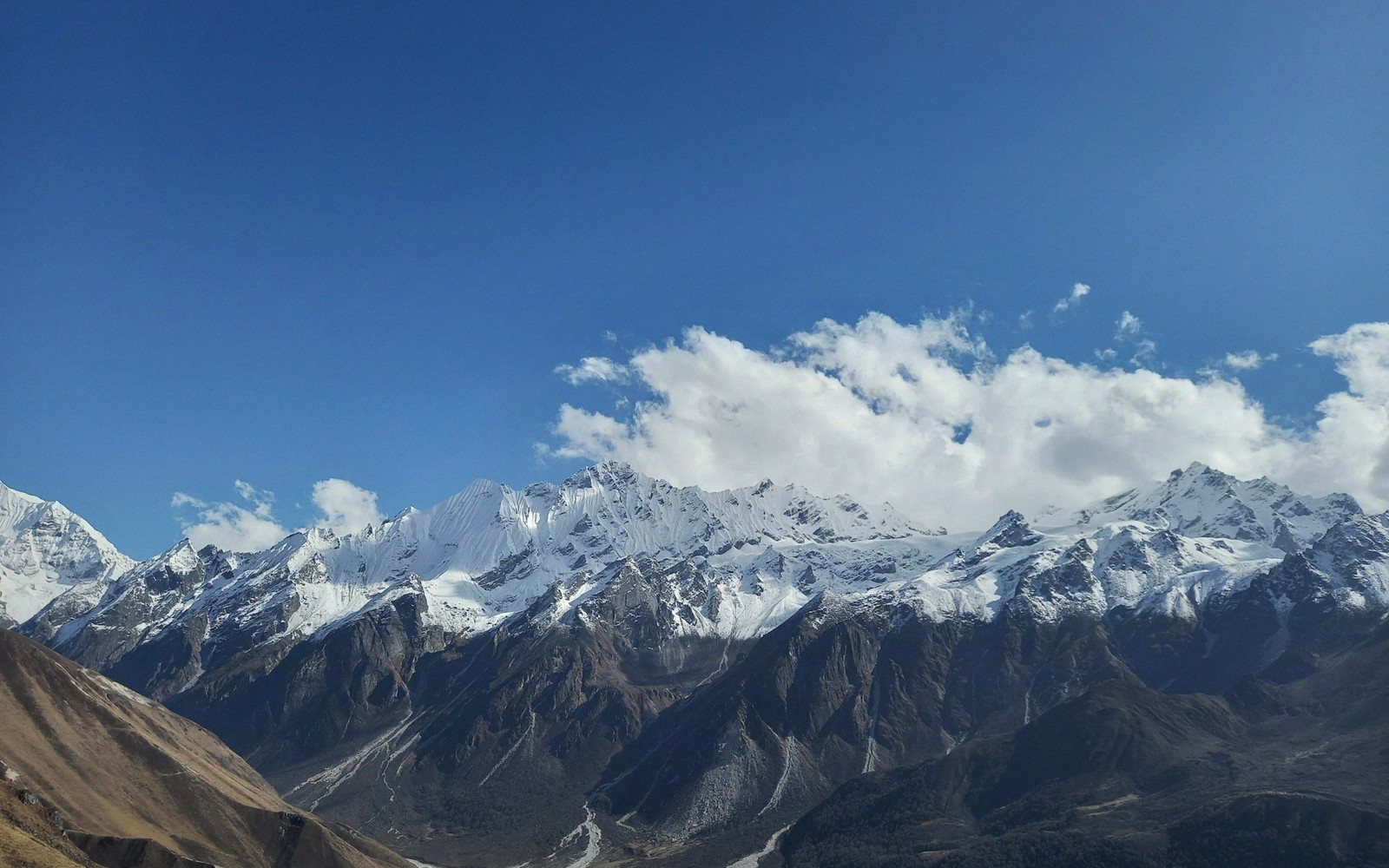
Section 01The Range Is Bigger Than Any One Trip
The Himalaya stretches more than 2,400 kilometres, from the Indus gorge in the northwest to the Brahmaputra bend in the east, and contains the highest concentration of serious altitude on the planet. A visitor arriving with two weeks and a sense of adventure faces an immediate problem: the range is not a single destination but a dozen distinct worlds, each with its own access point, elevation profile, season and character. Choosing well is the first skill of Himalayan travel.
The most useful first distinction is not between countries — Nepal, India, Bhutan — but between valleys that stay relatively low and valleys that go genuinely high. Cultures, food, architecture and flora differ dramatically between a river valley at 1,200 metres and a high pass at 5,000. Both have their devotees. Neither suits everyone.
Section 02The Classic Valleys: Nepal's Middle Hills and the Annapurna Basin
Pokhara sits at around 800 metres on the shore of Phewa Lake, with the Annapurna massif forming one of the most theatrical backdrops in Asia. From Pokhara, trekkers reach the Annapurna Sanctuary, a glacial cirque enclosed by peaks above 7,000 metres, in roughly a week of walking. The trail gains elevation steadily but the approach through rhododendron forest and Gurung villages keeps the experience varied and human-scaled before the alpine terrain closes in.
The Annapurna Circuit, which loops around the entire massif over two to three weeks, was once the definitive long Himalayan walk. Road construction has changed its character: the lower sections are now partly roadable, and most walkers skip to the upper valley around Manang before crossing the Thorong La at over 5,400 metres. That high crossing remains serious — altitude sickness is a real hazard, and acclimatisation days at Manang are not optional. What the circuit still offers that shorter routes cannot is a shift from the Hindu lowlands through Tibetan Buddhist high country and back, a cultural arc as dramatic as the topography.
Kathmandu's Langtang Valley, northeast of the capital, provides a radically different proposition: accessible by a day's drive, less trafficked than the Annapurna trails, and devastated by the 2015 earthquake before being substantially rebuilt by the communities that live there. Langtang rewards travellers who want Himalayan wilderness without committing to the full Annapurna itinerary — the valley reaches 3,870 metres at the main settlement, high enough for genuine mountain scale, modest enough to be manageable without significant altitude preparation.
From Pokhara, trekkers reach the Annapurna Sanctuary, a glacial cirque enclosed by peaks above 7,000 metres, in roughly a week of walking.
Section 03The Quieter Valleys: Spiti, Zanskar and the Indian Northwest
Across the border in India, the high desert valleys of Himachal Pradesh and Ladakh operate in a different register entirely. Spiti Valley, averaging somewhere above 4,000 metres across its length, is barren, spectacular and Buddhist — the white cube monasteries of Kaza, Tabo and Key belong to a Tibetan cultural landscape that was never integrated into the tourist circuits the way Nepal's trails were. Access is by a long mountain road that is closed under snow for a significant part of the year, which keeps crowds thin and the approach itself part of the experience.
Zanskar, further west, is even more isolated. In winter, when the river freezes, local people traditionally walked it as a highway — the chadar trek, now increasingly done by visitors too, follows the frozen Zanskar River through gorges that are impassable by any other route in that season. It is cold, physically demanding and wholly unlike anything in the trekking mainstream. The summer overland approach through Kargil and Padum opens a different kind of access but remains properly remote.
Ladakh's Indus Valley, reached by road from Manali or by a short flight into Leh, is the most accessible of the Indian high-altitude destinations and the one where infrastructure is most developed. Monasteries, homestays and an established guesthouse economy make it a reasonable base for both acclimatisation and short walks. The altitude — Leh sits at roughly 3,500 metres — means most travellers need two or three days of rest on arrival before attempting anything strenuous.
Section 04Matching Valley to Traveller
The question to ask before choosing is honest: what is the trip actually for? If the answer is a defined trek with a strong cultural throughline, Nepal's middle hills — the Annapurna or Everest regions — offer the most complete experience and the best support infrastructure. If the answer is emptiness, high desert, and Tibetan Buddhist heritage with fewer fellow travellers, Spiti or Zanskar ask more of the logistics but reward accordingly.
Season sharpens the decision further. The pre-monsoon window — roughly April to early June — brings wildflowers to the lower valleys and relatively stable weather before the clouds arrive. The post-monsoon window, September through November, gives the clearest skies and the most dramatic light, particularly for the high passes. The Indian desert valleys, being rain-shadow terrain, invert this logic: summer is when the road is open and the passes are accessible, and that is when you go.
No single valley contains the whole Himalaya. That is the reason people come back.