Section 01The Logic of the Overnight Train
You board after dark, you wake somewhere new, and you have saved a night's accommodation into the bargain. That is the basic arithmetic. But the overnight train offers something a budget flight cannot: the journey as useful time rather than dead time, a rolling introduction to the landscape before a city even appears. The train between Hue and Da Nang crosses the Hai Vân Pass in the morning. An overnight train from Kolkata to Varanasi deposits you at the ghats in the early morning cool. These arrivals are not incidental — they are part of the trip.
The continent runs on rail. India's network is one of the largest on earth, carrying more passengers daily than most countries have citizens. Vietnam runs a single main line the length of the country. Japan's shinkansen is a world unto itself, though it is not the overnight train's natural home. Thailand, Laos, Uzbekistan — each has a rail culture worth learning. The skill that unlocks all of them is the same: understanding the class system before you book.
Section 02Classes, Berths and What You Actually Get
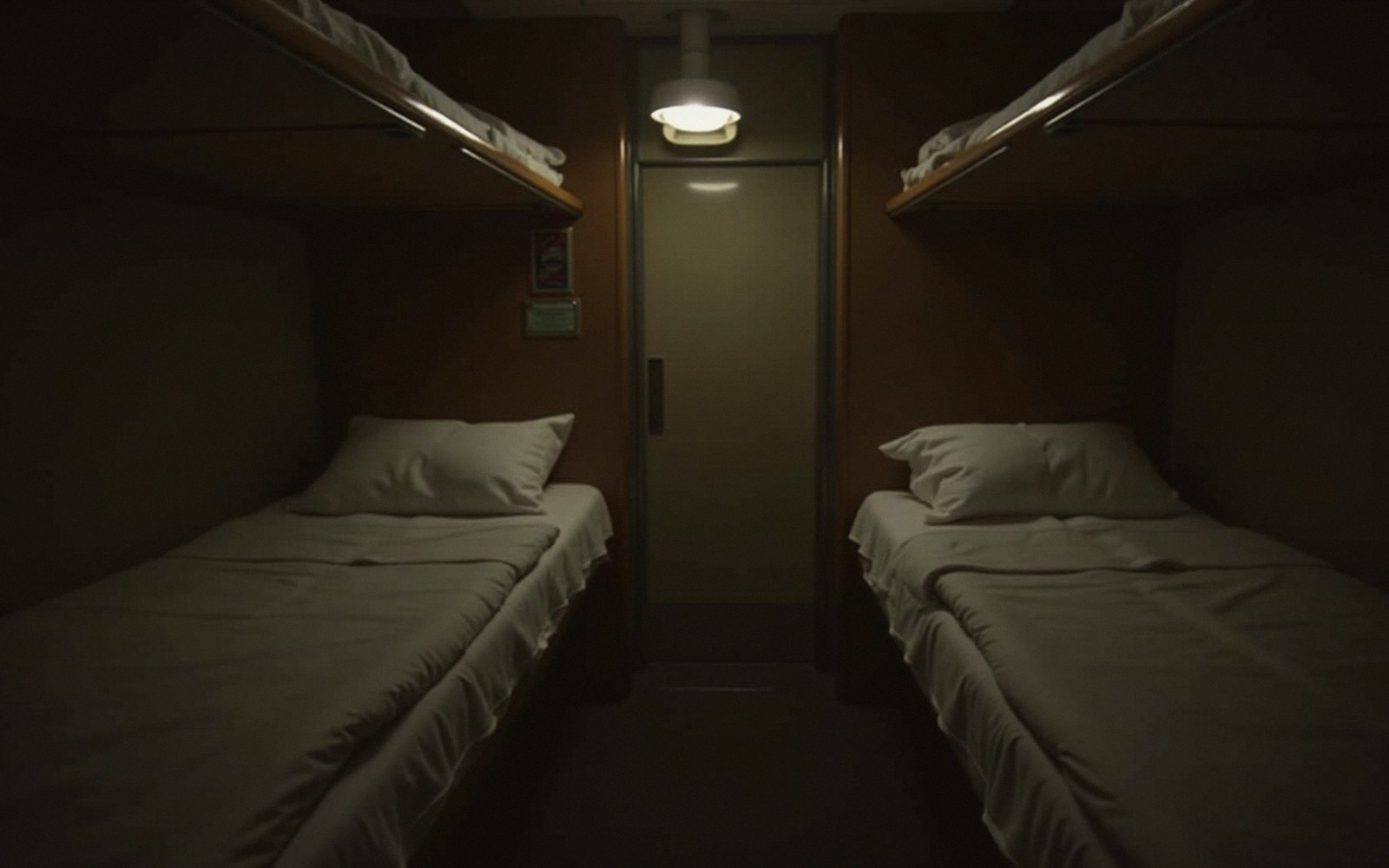
Almost every overnight rail system in Asia operates on a tiered berth structure. The vocabulary varies by country, but the logic is consistent. At the lower end sit hard seats — upright, unreserved and fine for short hops, exhausting for anything over four hours. Above that come hard sleepers, which in India, Vietnam and China are open-sided bunk arrangements, typically in bays of six berths stacked three high. They are sociable, ventilated and perfectly adequate for most travellers; the upper berth is slightly airless but quieter. Soft sleeper is the next tier: enclosed compartments, usually four berths, with a door. On some networks — India's air-conditioned classes, Vietnam's SE trains — you will find genuine bedding laid out on arrival; on others, a thin blanket and pillow are standard issue. Bring a cotton liner regardless.
The berth hierarchy has a spatial logic worth knowing. In a six-berth hard sleeper bay, the bottom bunk is the most sociable and doubles as a seat during the day, which means strangers sit on it freely until lights-out. The middle berth is the sweet spot: you can lock your bag beneath the mattress, nobody perches on you, and you are not climbing to altitude in the dark. The top is the quietest and the hottest — useful if you want privacy and sleep through anything. Book it deliberately rather than accepting it by default.
In Japan the overnight equation is different. The famous nobi nobi seat on some Sunrise express services is a reserved flat floor space rather than a proper berth — functional, genuinely flat and considerably cheaper than a private compartment. On long-distance Japanese overnights the shindai (sleeping car) is comfortable but expensive; many travellers use a JR Pass to ride daytime shinkansen instead and sleep in guesthouses. The overnight train is still the right tool in Japan, just applied more selectively.
Almost every overnight rail system in Asia operates on a tiered berth structure.
Section 03Booking Windows and the Art of Getting a Berth
The booking window is where most first-timers lose their nerve. In India, the Indian Railways network opens reservations sixty days in advance, and popular trains on the trunk routes — Mumbai to Goa, Delhi to Jaipur, the overnight Chennai expresses — fill within hours of opening. The tourist quota (a block of seats reserved for foreign visitors, bookable through major station booking offices or the IRCTC portal with a foreign card) offers a secondary route when general inventory shows full. It is not infinite, but it regularly comes through where the main quota does not. Vietnam's national rail operator opens seats roughly a month ahead, and the soft-sleeper cabins on the busiest corridor — Hanoi to Ho Chi Minh City — sell fast around Vietnamese holidays and the Tết period.
In Thailand, State Railway services are bookable weeks ahead and rarely sell out with the urgency of India, but the Chiang Mai sleeper and the southern overnights fill reliably on weekends. Uzbekistan's trains between Samarkand and Bukhara run on a tighter timetable and a Soviet-heritage booking system; in-country agents earn their fee here. The general rule: identify the trains that matter to your itinerary before you leave, note when the booking window opens, and treat that date like a flight reservation.
A few things to carry that the ticket never mentions: a padlock for the berth's luggage ring, a headtorch for reading without disturbing neighbours, earplugs for the enthusiastic snorer in the bay, and something to eat — station hawkers are excellent but the timing of their appearances is irregular. Platform food is one of the continent's great pleasures; the train pulling out while you hold a bowl of something hot is its own kind of arrival.