Section 01Read the entrance, not the guidebook
The rule is almost always posted at the door — a pictogram of a bare foot, a drawing of covered shoulders, occasionally both. Trust the sign over any general advice, because norms vary sharply even within a single country. A Hindu temple in Bali may require a sarong; the temple next door does not. A Japanese shrine rarely asks you to remove shoes; the inner hall of the same shrine might.
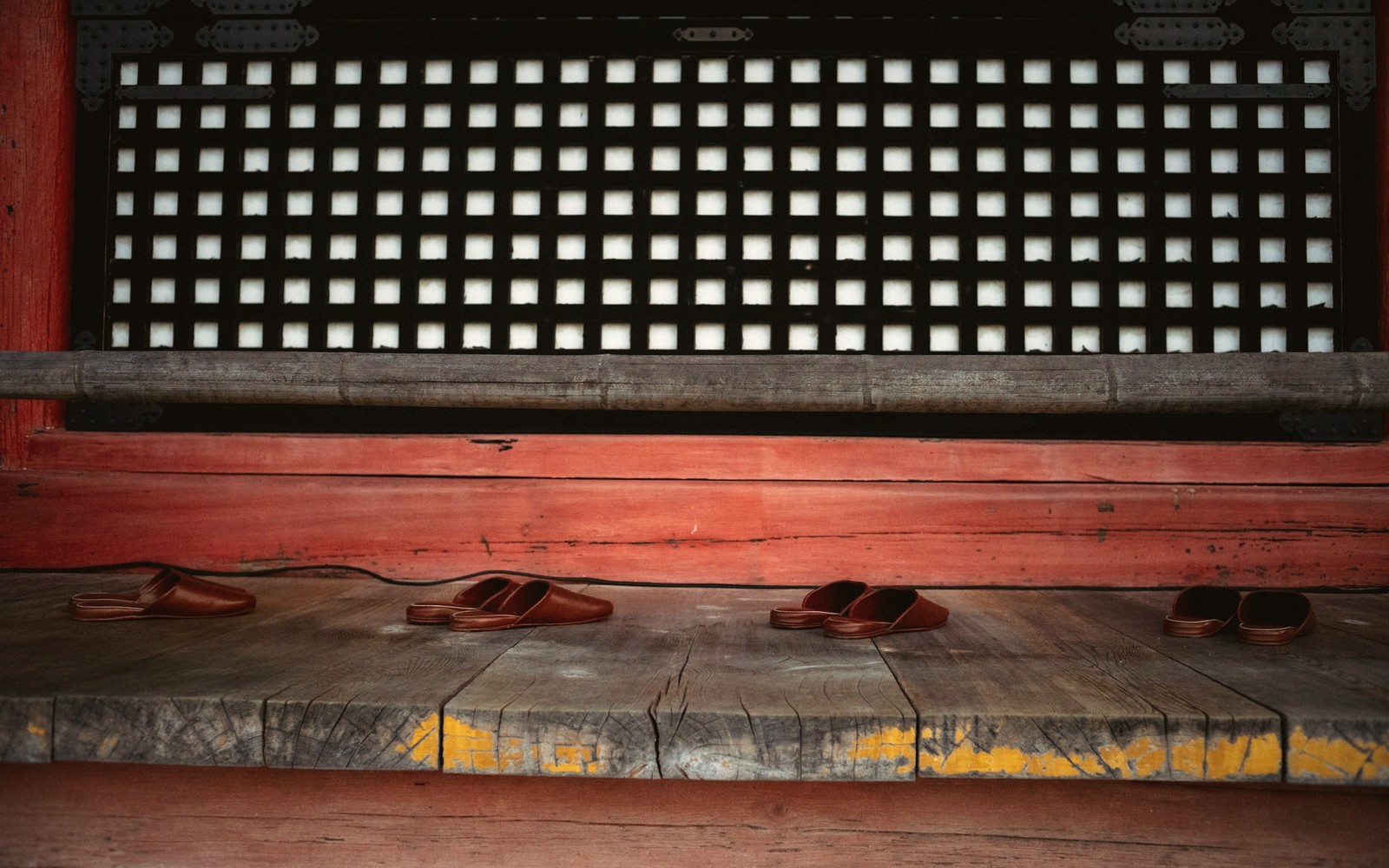
Shoes come off at the threshold of most Buddhist and Hindu temples across South and Southeast Asia, and inside nearly all homes from Kyoto to Kathmandu. The logic is cleanliness, not ceremony — the floor is living space. Remove them without being asked, leave them neatly oriented outward, and check whether a rack or shelf exists before leaving them on bare ground.
Shoulders and knees are the other threshold. Mosques, many Hindu temples, and Buddhist wats across Thailand, Laos and Cambodia will turn you away or hand you a wrap at the entrance. A light scarf or longish cotton shirt stuffed in a daypack solves this everywhere. In Varanasi and in the old towns of Uzbekistan's Silk Road cities, covered arms are expected outdoors as well as inside.
Photography is a separate negotiation. The absence of a "no photography" sign is not permission — in small shrines and active ceremonies, assume no, and ask with a gesture before raising a camera.
The golden rule, if there is one: look before you walk. Someone at the door slipping off sandals means it's shoes-off territory. Someone tucking in a scarf means cover up. Follow the person ahead of you, and the place will tell you what it needs.
The rule is almost always posted at the door — a pictogram of a bare foot, a drawing of covered shoulders, occasionally both.