The logic of festival travel
Most of Asia's calendar is full of local colour that rewards stumbling across it — a temple fair here, a harvest ceremony there. But a handful of festivals are different in kind. They are large enough, old enough, and strange enough that they reorganise your understanding of a place. These are the ones worth booking flights for, and booking early, because the accommodation arithmetic changes dramatically the moment a festival date anchors a town.
The catch is real. Every festival on this list will be crowded. Prices rise. Trains fill weeks out. Hotels that cost almost nothing in the shoulder season charge multiples. None of this is a reason to avoid them — it is simply the price of admission to something that doesn't happen any other week of the year. The planner who books three months out, sleeps in the next town over, and arrives a day early will have a fundamentally better experience than the one who arrives the morning of. That gap is the whole point of planning.
The unmissable ones
Lunar New Year, China and Vietnam (late January to mid-February, date shifts annually)
The biggest single human migration on the planet happens in the fortnight before the new lunar year as hundreds of millions of people return to family. For the independent traveller, this means one thing above all: move before it begins or stay put through it. Transportation in China effectively becomes unavailable at face value for roughly two weeks; Vietnam is similar. What you gain in exchange is extraordinary. Cities like Hanoi and Ho Chi Minh City shed their urban noise and become unexpectedly intimate. Temples fill with incense and family prayers. Red paper, firecrackers, ancestral offerings and roasted pork appear on every surface. If you time Hanoi in the days just before Tết — the Vietnamese iteration — you'll walk streets hung with kumquat trees and pink peach blossom that vendors have hauled in from the countryside. The city turns briefly, luminously domestic.
Book accommodation in your chosen city at least two months out. Accept that restaurants will be closed for several days around the new year itself, and treat the enforced wandering as the point.
Holi, North India (late February to March, on the Purnima full moon of Phalguna)
Holi is famous enough that almost every traveller to India has considered timing a trip around it, and it is worth doing — with a caveat about where. The festival of colour is celebrated across the Hindi-speaking heartland, but it is not homogeneous. Varanasi's Holi is older and stranger than most; the city observes a burning-ground version called Monmasaan Holi at the cremation ghats days before the main event, which is one of the more remarkable things you can witness anywhere on the continent. Mathura and Vrindavan, the towns associated with Krishna's childhood, run celebrations over multiple days that pull in enormous crowds of Indian pilgrims alongside foreign visitors. Smaller towns in Rajasthan tend to be more relaxed. Wherever you go, the practical rules are identical: wear white or clothes you can abandon, protect your camera with a sealed bag, and understand that the powder and water are coming regardless.
Book at least six weeks out for any North Indian destination in this window. The week after Holi is often chaotic for onward transport, so build in a buffer day.
Songkran, Thailand (13–15 April, though extended in some cities)
The Thai new year is celebrated with water, and by "with water" this guide means that Chiang Mai and Bangkok become three-day water fights of genuine civic scale. Streets in the old city of Chiang Mai are effectively impassable without getting drenched; that is not a hazard, it is the experience. The deeper current of Songkran is the Buddhist tradition of washing Buddha images and pouring scented water over the hands of elders as a gesture of respect — the street chaos and the temple ritual coexist, and both are worth seeking out.
Timing is complicated by heat. Mid-April is the hottest point of the Thai year, before the southwest monsoon arrives, and temperatures in the north regularly exceed 38°C. The water is a practical relief as much as a festivity. The air quality around Chiang Mai in April can also be affected by agricultural burning in the hills; check conditions in advance, and if you have respiratory sensitivities, Bangkok or a coastal town may serve better.
Book accommodation in Chiang Mai four to six weeks out at minimum. Expect elevated prices across the board.
Diwali, across India and Nepal (October to November, date shifts annually)
Diwali, the festival of lights, doesn't belong to one city the way some festivals do. It is observed from Kolkata to Kathmandu, in Tamil Nadu and in Rajasthan, though the form it takes varies considerably by region. What remains consistent is the basic grammar: oil lamps and electric lights on every surface, fireworks from dusk to late into the night, sweets exchanged between households, and a particular quality of late-October evening warmth in the plains. Varanasi is again exceptional — the ghats lit by thousands of diyas, boats on the Ganges, and a palpable sense of the city doing what it has always done. Jaipur and Udaipur are popular for good reason; both manage their celebrations with enough civic infrastructure to remain manageable for visitors.
Nepal celebrates Tihar, its equivalent, over five days at the same time, and Kathmandu handles it with a warmth the larger Indian cities can occasionally overwhelm. If you are already planning a Himalayan trip into autumn — arguably the best trekking season — the timing aligns well.
Boun Ok Phansa, Luang Prabang, Laos (end of the Buddhist Lent, October full moon)
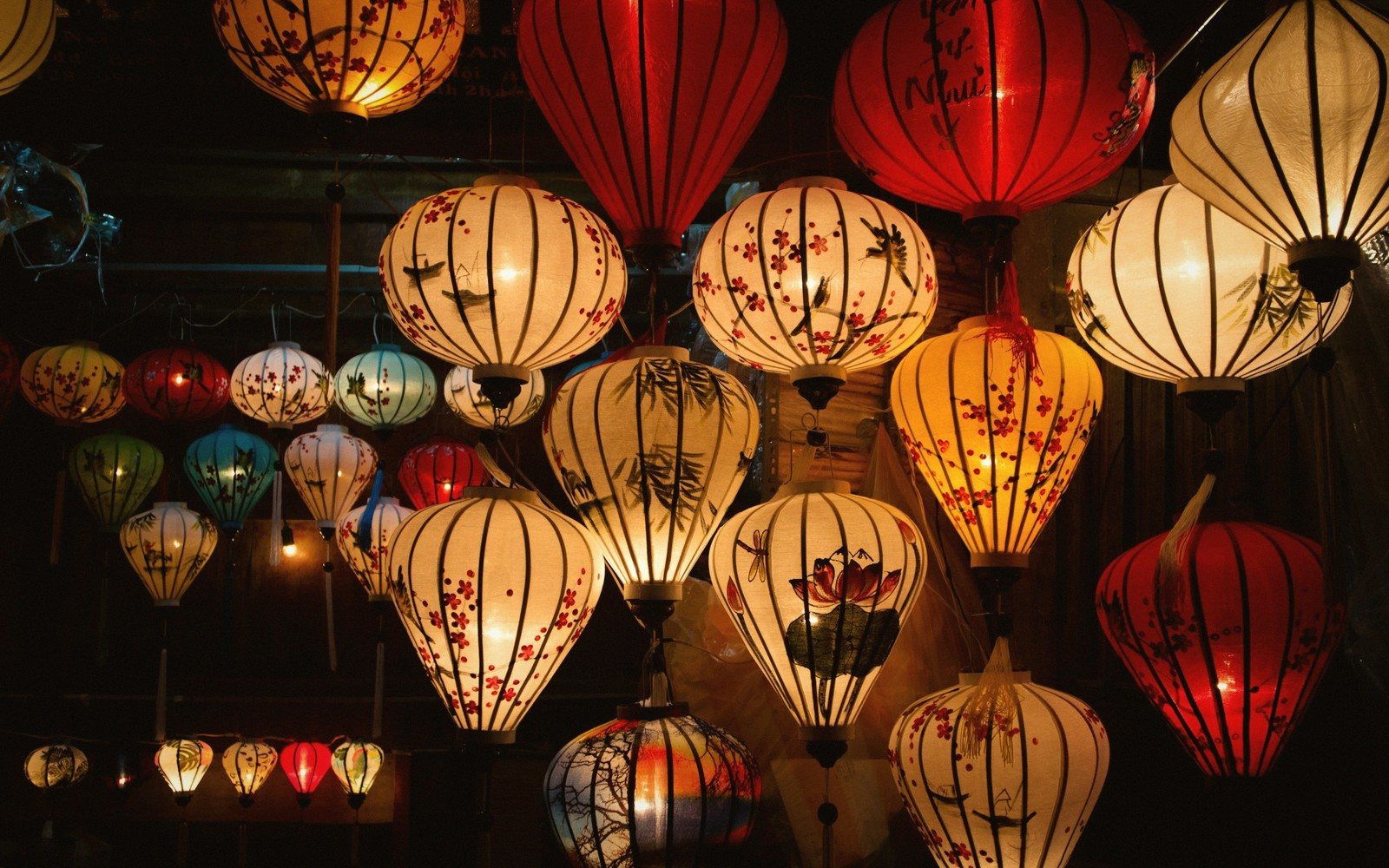
Less known outside Southeast Asia than Songkran or Tết, Boun Ok Phansa — the end of Buddhist Lent — is arguably the most beautiful night festival on the Mekong. In Luang Prabang, the celebration centres on the release of illuminated boats and lanterns onto the Nam Khan and Mekong rivers at dusk, alongside boat races, alms-giving processions, and the monks' temples blazing with candlelight. The scale is human rather than overwhelming; Luang Prabang is a small town, and the festival still belongs firmly to its residents rather than having been reconfigured for tourism.
October is the tail end of Laos's wet season, and the rivers run high and fast, which makes the floating boats and lanterns all the more charged an image. Afternoons can still see rain; mornings are usually clear. It is worth arriving two or three days early for the pre-festival boat race preparations, which are festive in their own right and considerably quieter than the main night.
Awa Odori, Tokushima, Japan (mid-August)
Every Obon season in Japan brings the spirits of ancestors back to the living world, and communities across the country mark the occasion with dance. But the Awa Odori of Tokushima on Shikoku — a four-day dance festival held in mid-August — is on a different scale entirely. For four evenings, the streets fill with organised troupes called ren performing the Awa dance, a loose-limbed, call-and-response style unique to this region. What is striking is the participation: troupes contain children, grandparents, office workers, and professional dancers, all in yukata and straw hats. Tokushima is not on most Japan itineraries, which is the point. The festival is one of Japan's largest, routinely drawing enormous crowds, but it has not been flattened into a tourism product the way some urban festivals have.
Getting there requires intent — a flight to Osaka or Tokyo and then the train-and-bridge crossing to Shikoku — but that is precisely what keeps it honest. Book a full season ahead; the city fills completely.
What all of these ask of you
The pattern is consistent across every festival on this list. Book accommodation early — sometimes months early, not weeks. Budget for transport costs that are simply higher during peak festival windows. Arrive a day ahead and leave a day after the main event, when the worst of the chaos has passed. Bring patience with crowds, flexibility about food availability, and the willingness to let the schedule go when something unexpected appears in front of you.
The other thing they ask, collectively, is that you come to participate rather than photograph. You will photograph anyway — everyone does — but the festivals on this list are not set dressing. They are things people actually do, for reasons that predate your presence. That is, finally, what makes them worth the planning.
Most of Asia's calendar is full of local colour that rewards stumbling across it — a temple fair here, a harvest ceremony there.