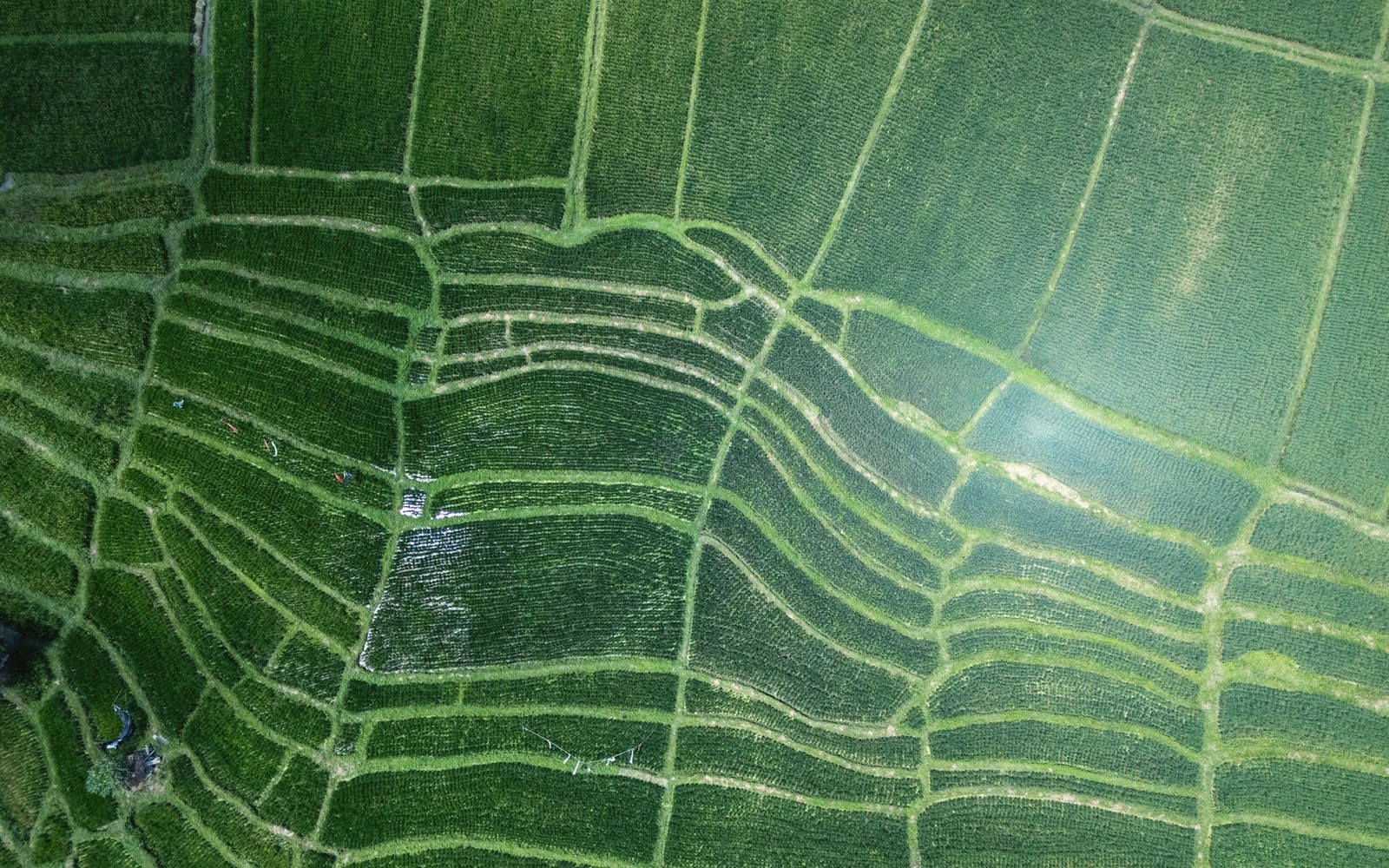
Section 01One Crop, Many Grains
Rice is not a background ingredient in Asia — it is the meal, the culture, the calendar. But the word covers so much ground that ordering "rice" in Hanoi and ordering "rice" in Kyoto will put two almost unrelated things on your table. The differences are not cosmetic. Grain length, starch type, water content, milling method and age of harvest each steer a variety toward a completely different culinary tradition. Understanding the basic lines of that geography makes eating across the continent sharper and more interesting.
The broadest split is between indica and japonica — the two main subspecies. Indica varieties tend to be long-grained, lower in amylopectin (the starch that causes stickiness) and fluffy when cooked. Japonica varieties are shorter, rounder, higher in amylopectin and clingy. A third category — glutinous or waxy rice, sometimes called sticky rice — is technically a separate genetic trait that can appear in both indica and japonica lines, and it commands an entire culinary world of its own across Southeast and East Asia.
Rice is not a background ingredient in Asia — it is the meal, the culture, the calendar.
Section 02South and Southeast Asia: Fluffy, Fermented, Sticky
Across South Asia — India, Nepal, Bangladesh, Sri Lanka — the long-grain indica dominates. Basmati, grown in the Himalayan foothills and across the Indo-Gangetic plain, is prized for its fragrance and the way its grains stay separate after cooking, elongating further as they steam. It suits the spiced, sauce-heavy cooking of the subcontinent because each grain absorbs flavour without collapsing into a mass. In Bengal — both West Bengal around Kolkata and the Bangladesh side — shorter, aromatic varieties like gobindobhog are used for sweets and festival cooking, a reminder that regional character exists even within a single country. At the ghats of Varanasi, the daily meal is often boiled rice with dal; the grain is utility, not spectacle.
Move east and south and the picture changes. In mainland Southeast Asia — Thailand, Laos, Vietnam, Myanmar — the grain shifts with the sub-region. Northern Thailand and virtually all of Laos run on glutinous sticky rice, steamed in conical bamboo baskets and eaten with the hands, pinched into small balls and used to scoop up meat, fish and relishes. It is inseparable from daily life in Luang Prabang, where monks receive it in alms baskets every dawn. Southern Thailand and central Vietnam, by contrast, use long-grain indica — jasmine rice in Thailand, the subtly different varieties of the Mekong delta and the central Vietnamese coast in Vietnam. In Hoi An, white rice arrives plain beside the bowl of broth; in Bangkok, fragrant jasmine rice underlies a curry or a stir-fry without competing with it.
Vietnam adds fermented rice to the picture. Throughout the country, rice is the base for rượu, distilled rice spirits; and sticky rice is fermented into cơm rượu, small wine-rice balls with a gentle alcoholic tang eaten as a snack or dessert. Fermented and pickled rice preparations appear across the region — narezushi in its earliest form in Southeast Asia used rice as a fermentation medium for fish before it was even eaten.
Section 03East and Central Asia: The Short Grain and the Pilaf
In East Asia — Japan, Korea, much of coastal China — japonica short-grain rice takes over completely. Cooked Japanese rice is soft, slightly sticky and sweet-smelling; it clings enough to be picked up cleanly with chopsticks but maintains individual grain texture. Tokyo restaurant culture is serious about its rice: variety, water source and cooking vessel all enter the conversation. Sushi rice is a specific preparation of the same short-grain base, seasoned with vinegar and salt, where the texture of the grain is everything. In Korea, the same short-grain rice is often cooked in a heavy stone pot, yielding a crisp scorched layer at the bottom — nurungji — that is eaten as is or dissolved into hot water for a thin porridge.
Go further west, into Central Asia — Uzbekistan, Tajikistan, Kazakhstan — and the cooking logic changes entirely. Here, the great cities of the Silk Road were rice-growing and rice-trading centres, and the main expression is plov: rice cooked in fat with lamb, carrots and onion in a heavy cast-iron kazan. Samarkand and Bukhara each maintain local variations — Samarkand's plov is typically layered rather than mixed. The rice used is a medium-grain variety that absorbs fat and broth without turning mushy, a requirement entirely different from the demands of a Japanese rice bowl or a Lao sticky-rice basket.
The grain is the same species. The grain is never the same dish.